Commonly known as silver tussock, this native grass is excellent for beautifying most landscapes, with its ability to flourish in dry to wet, coastal to inland and windy conditions. Alongside these hardy attributes the plant has a beautiful upright form, and works well in larger groupings as a field effect (if planted at around 80cm centers). It grows to around 1m high, with a one meter spread, and can be readily sourced throughout NZ.
Showing posts with label Grasses and sedges. Show all posts
Spinifex sericeus
Commonly known just as Spinifex, this native grass covers the beaches of New Zealand. It makes up most of the dune building planting throughout NZ. It is destinguishable by its silvery shade, although it can be confused with Elytrigia repens, commonly known as 'couch', a member of the same family (Poaceae), yet it is not a native.
This specific example was found on the south coast of the Wellington region.
Seen here are the creeping culms, that stretch out connecting distinct 'bushes', this growth method leads to the strengthening of dunes, a feature highly utilized in dune retaining efforts throughout NZ.
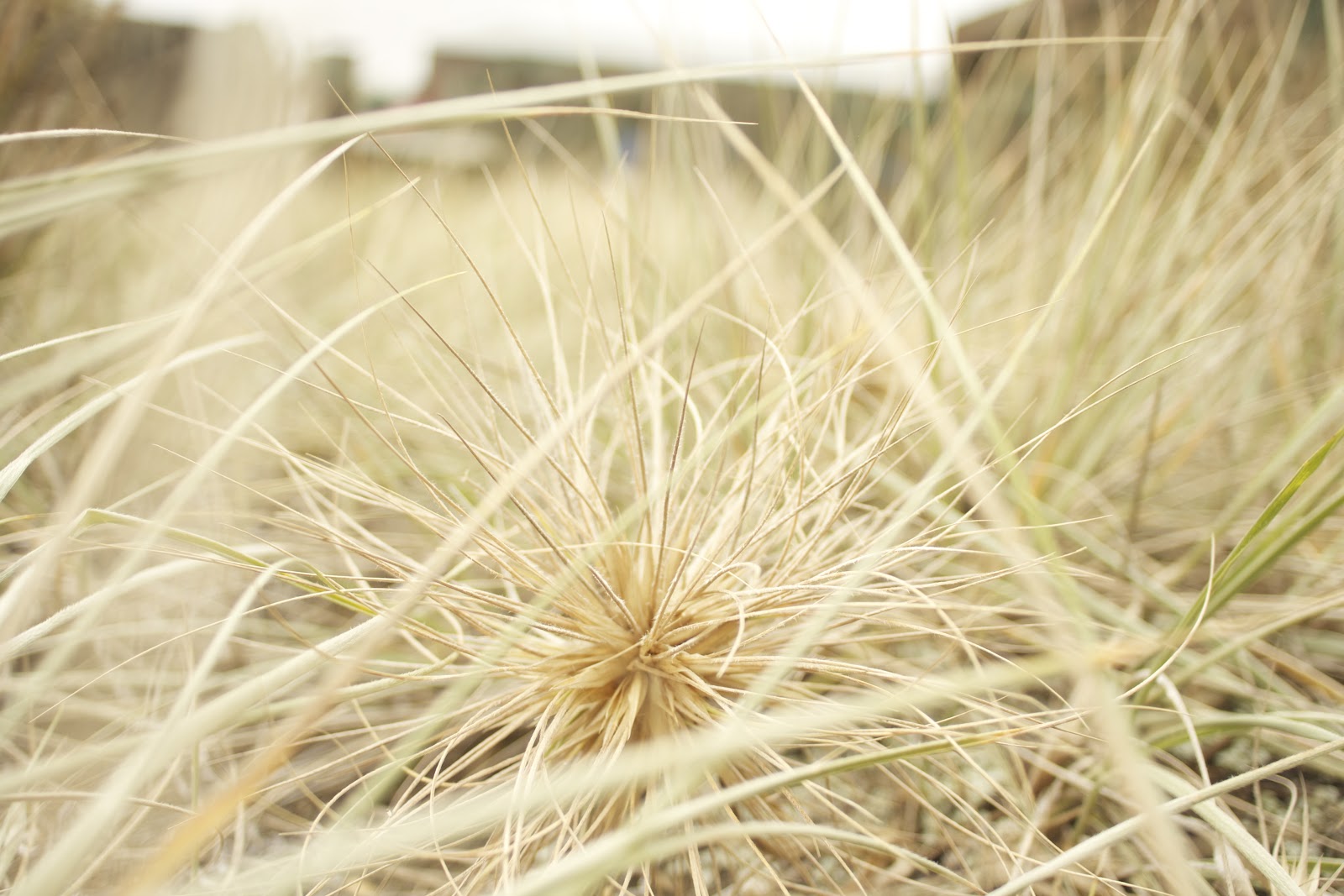
The female seed head, distinctive in it's spiky form helps to identify the presence of spinifex, as they are often seen 'tumbling' along the beach.
Seen in this photo is the male cluster, both male and female plants need to be present for productive spreading of the plant.
Schoenoplectus tabernaemontani
Commonly known as Great Bullrush or lake club rush, this plant is in the sedge family and grows from 1-2m high. It grows in small clumps, that in areas with wet soil will sit tighter together to create a ground cover. It is pictured here in Banks Peninsula, NZ, yet is also known to grow in Auckland area.
Scleranthus biflorus - Two-flowered Knawel, with Tetragonia tetragonioides - native spinach in the background